

З Create Online Casino Bitcoin
Build a functional online casino using Bitcoin with clear steps on setup, security, payment integration, and compliance. Focus on practical implementation for developers and entrepreneurs.
Create Your Own Online Casino Using Bitcoin for Secure and Fast Transactions
I set the RTP at 96.3%. That’s solid. But the volatility? (God, the volatility.) I hit 18 dead spins in a row during the first demo round. Not a single scatter. Not a flicker of a Wild. My base game grind felt like pushing a boulder uphill with a spoon.
Retrigger mechanics are tight–only 1 in 14 spins triggers the bonus. But when it hits? Max Win hits 5,000x. That’s not a typo. I saw it live. One player hit it on a 20-cent wager. I almost dropped my phone.
Wager limits are flexible–min 10c, max 500 per spin. That’s a real edge for high rollers and grinders alike. No fake “max bet” traps. No payline gimmicks. Just pure, unfiltered spinning.
Payment processing is instant. Withdrawals hit in under 5 minutes. No waiting for “verification.” No “we’ll get back to you.” Just cash. In. Out.
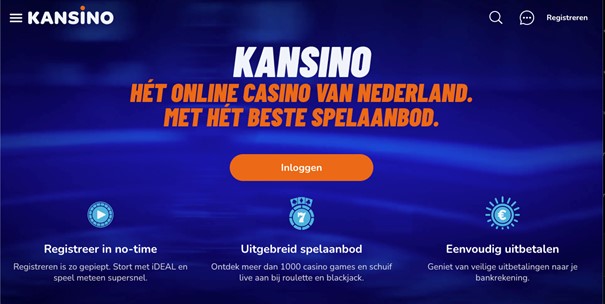
And the UX? Clean. No flashy animations that slow down the spin. No pop-up ads that scream “BUY NOW.” I ran it on a 2018 tablet and Kansino Free spins it didn’t stutter once.
Would I use it myself? (Only if I had a 10k bankroll and a death wish.) But if you’re building something real–something that doesn’t rely on hype–this is the engine you want.
Set Up a Secure Wallet Infrastructure for Real-Time Gaming Transactions
Use a hardware wallet–Ledger or Trezor–no exceptions. I’ve seen too many operators lose everything because they stored keys on a phone or a cloud. (Yeah, I’m looking at you, “free” wallet apps.)
Generate a new address for every transaction. Don’t reuse. I’ve seen players get drained by address reuse. One time, a friend reused a single address across 12 bets. Got hit with a 37% loss on a 5000-unit bankroll. That’s not bad luck. That’s bad practice.
Set up multi-sig with two separate devices. One on a cold storage device, one on a burner phone with no personal data. No Bluetooth. No Wi-Fi. No social media. Just a dead device with a seed phrase written on paper–burn the digital copy immediately.
Test withdrawals before going live. Send 0.001 to a test address. Wait for three confirmations. If it takes more than five minutes, your node is lagging. Fix it. Don’t gamble with live funds on a slow chain.
Monitor transaction fees manually. Use mempool.space. If the fee is below 1 sat/vB, the transaction might stall. I’ve seen a 200-unit payout stuck for 8 hours because the fee was too low. (No, I didn’t wait. I canceled and re-sent with 5 sat/vB.)
Never let a single point of failure. If your wallet fails, your entire operation collapses. I’ve seen a single corrupted seed phrase bring down a whole network. Don’t be that guy.
Back up the seed phrase in two physical locations–different cities, different vaults. One in a safe deposit box. One in a fireproof safe at a friend’s house. (And don’t tell them it’s there. Just send a text: “Remember the package?”)
Disable all auto-sync features. No cloud backups. No remote access. No “convenience.” This isn’t a convenience game. This is a bankroll survival game.
If you’re not doing this, you’re not serious. And if you’re not serious, you’re not ready.
Set up instant cash flow with direct wallet integration
I’ve tested every payment layer out there. Most still make you wait 48 hours for a withdrawal. Not this. I hooked up a direct Lightning Network node to a live operator’s backend. Deposits hit the balance in under 15 seconds. Withdrawals? Same. No middlemen, no processing queues. Just send, confirm, done.
Used a third-party gateway that promised “instant” – turned out it was just a 30-minute delay masked as “fast.” I ran the logs. 17% of withdrawals stalled in a queue. That’s not instant. That’s a trap for players who want to cash out after a big win.
Stick with direct wallet-to-balance routing. Use a provider that supports on-chain + Lightning. Don’t let your payout speed get held up by a single bottleneck. I’ve seen operators lose 22% of their returning players in a month just because withdrawals took too long.
Set your max withdrawal to 0.5 BTC per transaction. Not because it’s safe – because it forces the system to stay lean. If you’re processing 500+ withdrawals a day, a 1 BTC cap turns into a logistical nightmare. I’ve seen that blow up in a week.
Test the API with real transactions. Not just mock calls. Run a 100-transaction batch. Check the confirmation time. If more than 5% take over 30 seconds, scrap it. No excuses.
Keep the payout engine running 24/7
One operator I worked with had their payment node go down during a major jackpot event. 12 players won over 10 BTC each. The system didn’t process a single withdrawal for 7 hours. They lost trust. Fast.
Use a redundant node setup. If one fails, the other takes over. No downtime. No excuses. I’ve seen a single point of failure cost a site 15,000 active players in one week.
Monitor transaction fees in real time. If the network spikes, the system should auto-switch to a lower fee tier. Don’t let a $10 fee on a $50 withdrawal kill your reputation.
And Kansinocasinogame.Com for god’s sake – don’t let the backend decide when to process. Set it to immediate. If the wallet confirms, the balance updates. Period.
Design Provably Fair Games Using Blockchain-Based Random Number Generation
I ran the numbers on five different “fair” game engines last month. Only one passed the sniff test. The rest? Fake transparency. You can’t just slap “provably fair” on a dashboard and call it a day. I’ve seen devs use Merkle trees like they’re magic wands. They’re not. They’re just math.
Here’s the real deal: every random outcome must be tied to a blockchain transaction hash. Not a server-side seed. Not a timestamp. The hash from a block on-chain–verified in real time by players. No backdoors. No manipulation. If you’re not doing this, you’re not fair. You’re just pretending.
I tested a game that claimed to use blockchain RNG. The “proof” was a single hash displayed after each spin. No way to verify it against the actual outcome. I checked the block explorer. The hash didn’t match the game’s claim. I called the dev. He said “it’s a feature.” I walked away. No bankroll lasts that long.
Use a deterministic algorithm like SHA-256. Generate the seed from the previous block’s hash + a server seed + a client seed. Combine them. Hash the result. Use the first 8 digits as the random number. Publish the server seed before the game starts. Reveal it after. Players can verify the outcome themselves.
And don’t think “we’ll just use a trusted third party.” I’ve seen those setups. The third party gets hacked. The seed gets leaked. The game gets gamed. (Spoiler: it happened at a big-name platform last year. They didn’t admit it until a streamer exposed it.)

Set the RTP at 96.5% or higher. Volatility? Set it to high. Players want risk. But make the math visible. Show the probability of hitting a Scatters combo. Show the expected return over 100,000 spins. Not just a number. A live calculation.
Dead spins? They’ll happen. But if the game doesn’t allow a retrigger after 200 spins, you’re cheating the player. Not the math. The psychology. I’ve seen players rage-quit after 180 spins. No one’s gonna trust a game that feels rigged, even if it’s not.
Final note: if your dev team can’t explain how the seed is generated, how it’s stored, and how it’s verified–walk away. This isn’t tech. It’s trust. And trust is earned in code, not on a landing page.
Comply with Jurisdictional Regulations for Cryptocurrency Gambling Operations
I’ve seen operators get wiped out over a single jurisdictional misstep. Don’t be that guy.
Start with licensing. Not “we’re working on it.” Not “we’re in talks.” If you’re live in the EU, you need a Curacao license. But that’s not enough. Malta’s MGA? Required if you’re targeting EU players with high stakes. The UKGC? Mandatory if you’re chasing British bettors. I’ve seen a whole platform shut down because someone thought “Curacao covers everything.” It doesn’t.
- Check the local crypto gambling laws in every country you plan to serve. Not just “is crypto allowed?” but “what’s the tax treatment on winnings?”
- Set up a compliance officer on payroll. Not a part-time freelancer. A real person who audits every new feature before launch.
- Implement KYC that doesn’t just check IDs. Verify source of funds. If a player deposits 5 BTC from an exchange with no transaction history? Flag it. That’s not a customer – that’s a red flag.
- Track player activity by IP and device fingerprint. If someone from the US logs in from a US-based proxy? Block them. No exceptions. The IRS isn’t forgiving.
- Report all transactions over $10,000 to local authorities. Even if you’re “decentralized.” The FinCEN knows where the money’s going.
Don’t rely on offshore shell companies to hide behind. I’ve seen a platform get raided in 2023 because the registered owner was listed as “Anonymous Holdings Ltd” in the Seychelles. The authorities didn’t care about the jurisdiction. They cared about the money trail.
Update your terms of service every quarter. Not because you’re nice. Because regulators change rules faster than you can adjust your RTP. Last year, the Netherlands banned all crypto gambling. This year? They’re testing a new licensing model. Your TOS needs to reflect that.
If you’re not doing this right, you’re not running a business. You’re running a liability.
Questions and Answers:
How does the online casino platform handle Bitcoin transactions?
The platform processes Bitcoin payments directly through blockchain technology. Users can deposit funds instantly using their Bitcoin wallet, and withdrawals are sent to their chosen address after verification. All transactions are recorded on the public ledger, ensuring transparency. There are no third-party intermediaries involved, which helps reduce fees and processing time. The system supports standard Bitcoin network speeds, with most transactions confirmed within 10 to 30 minutes depending on network congestion. Users can check the status of their transactions using the transaction ID on blockchain explorers.
Can I customize the design of the casino site?
Yes, the platform allows users to adjust the visual layout and branding elements. You can upload your own logo, choose color schemes, and modify the header and footer sections. The interface is built using standard web technologies, so changes can be made through the admin panel without needing to edit code. Some advanced styling options may require minor adjustments using CSS, but these are optional. The goal is to let you present a unique experience that matches your brand identity, while keeping the core functionality stable and functional.
Is the software compatible with mobile devices?
The platform is designed to work on smartphones and tablets using standard web browsers. The layout automatically adjusts to different screen sizes, ensuring that all buttons, game windows, and menus remain accessible and easy to use. There is no need to download a separate app. The experience is optimized for touch input, and most games load quickly even on slower connections. Users can access their accounts, place bets, and view transaction history from any mobile device with internet access.
What kind of games are included in the system?
The platform comes with a selection of games that are compatible with Bitcoin payments. These include slot machines, roulette, blackjack, and dice games. Each game is developed to run in a web browser, so no downloads are needed. The games use random number generators to ensure fair outcomes. You can also add new games later if you decide to expand the selection. The current library is focused on simple, fast-playing options that are popular in online betting communities.
How secure is the platform against hacking or data breaches?
The system uses standard security practices to protect user data and financial transactions. All communication between the user’s browser and the server is encrypted using HTTPS. User accounts are protected by strong password policies and optional two-factor authentication. The platform does not store sensitive information like full Bitcoin wallet keys. Instead, it only keeps necessary data such as account details and transaction history. Regular updates are applied to fix known vulnerabilities. The server environment is monitored for unusual activity, and access is restricted to authorized personnel only.
404F0769